
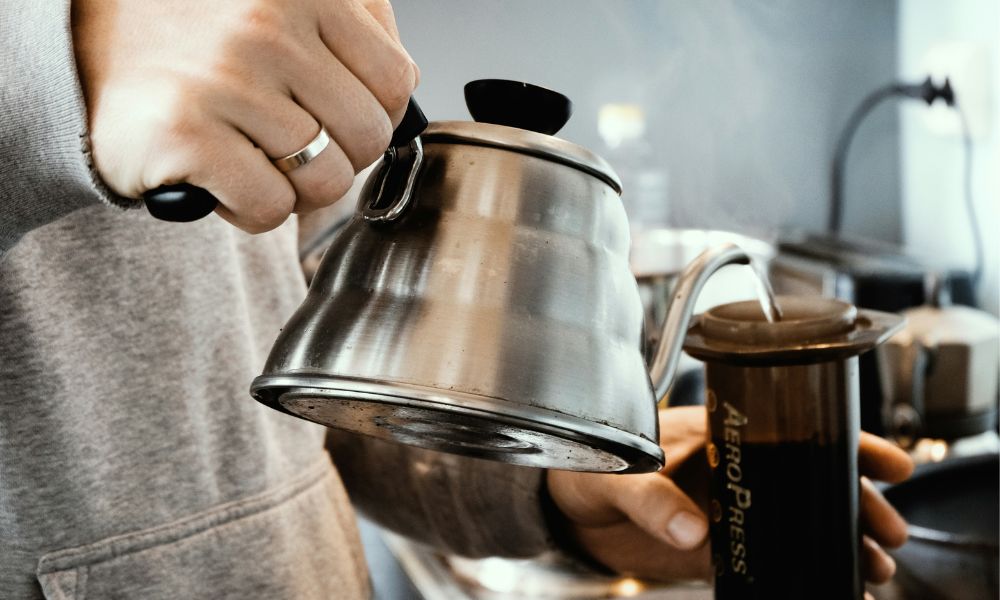
Key takeaways
- The AeroPress is a forgiving, versatile device that suits everyone from first-time users to championship-level competitors, requiring no barista-level skills to produce a quality cup.
- Core variables – grind size, water temperature, and coffee-to-water ratio – each shape the final cup, and small, deliberate adjustments to any one of them can change the result dramatically.
- The AeroPress combines immersion and pressure making a coffee, which lets it produce a wide range of flavour profiles, from espresso-style concentrates to lighter, filter-like cups.
Few coffee-making methods can match the AeroPress's versatility. Speciality coffee enthusiasts and World AeroPress Championship (WAC) competitors have, over the years, shown just how many ways there are to pull a great cup from this little device.
Users today can adjust the variables for making a coffee and switch up styles while still delivering a quality cup. Add to that the growing range of AeroPress models beyond the original, and the creative possibilities become wider than ever.
Of course, none of that experimentation means much without a solid foundation. That's why we spoke to Okot George, an AeroPress champion, about how to make coffee in an AeroPress. He's also the founder of Uganda-based Niimobt Development Hub, an SCA Trainer, Q Grader, CVA Cupper, and a pro coffee roaster. Read on for his insights.
How to make coffee in AeroPress: Our instructions
Yes – how to make coffee in AeroPress is straightforward, even for those with no barista-level skills.
The AeroPress traces its roots back to 2005 during the Seattle CoffeeFest. Despite how far it has come in design, it remains as simple as ever to use. Okot's approach reflects exactly that.
"My AeroPress method is simple and consistent," he explains, adding it's "designed to highlight clarity and sweetness with intent to appreciate the energy, persistence and determination across the value chain."
Before anything else, gather the following:
- AeroPress coffee maker
- Paper filter
- Coffee beans
- Coffee grinder (if starting with whole coffee beans)
- 300ml of fresh water
- Kettle
- Digital scale
- Timer
- Mug or carafe
The variable recommendations in Okot's AeroPress brewing guide come from years of championship-level experience. He starts with grind size, given just how much it shapes what ends up in the cup.
"Medium to medium-fine (similar to table salt)," he advises, but acknowledges there's room for adjustment.
He adds, "This is deemed to fluctuate slightly below or above, considering the nature of coffee, water TDS, temperature and roast profile."
For the coffee-to-water ratio, he says 1:15 (± 5) is the ideal starting point. "Given 15g of coffee, 225ml of water brews the cup – but also consider that the ratio can be altered, aiming at a specific flavour profile," he adds.
On water temperature, Okot stays within the 87–92°C range, but makes it clear that roast level should guide this. "Lower temperature for raised caramelisation, slightly higher for lighter roasts," he specifies.
With those variables set, here's how he makes coffee in AeroPress step by step:
-
Rinse the paper filter and preheat the AeroPress and cup.
-
Add 10g of freshly ground coffee.
-
Pour about 50ml of water for blooming and let it sit for 30 seconds.
-
Add the remaining 5g of ground coffee.
-
Add water up to 225ml, pouring slowly over one minute.
-
Stir gently 2–3 times to ensure even extraction, back and forth.
-
Insert the plunger and let it steep for around 1:30.
-
Press slowly and steadily for 20–30 seconds.
Total time: around two minutes.
From there, give the AeroPress coffee a gentle swirl for about 30 seconds, pour into your carafe or mug, and enjoy. "This method gives a clean, balanced cup with good body and sweetness," Okot reassures.
AeroPress coffee brewing tips
Every AeroPress champion has a structured routine, and Okot is no different – but his isn't rigid. Flexibility is built in, and a few targeted adjustments can make a significant difference to the cup.
Coffee freshness directly influences flavour and aroma. Okot puts the sweet spot at "ideally within 7–21 days after roasting." That's the window where vibrant acidity, complex aromas, and balanced flavour all come alive. Stray too far outside it, and the cup turns flat or dull.
The standard grind size gives you a starting point – from there, trial and error will reveal what works best for your AeroPress coffee. "If the coffee tastes sour, grind finer," Okot explains. "If bitter, go coarser."
Water temperature and brew ratio deserve the same level of curiosity, as they control the extraction rate, flavour release, strength, and mouthfeel. Okot favours lower temperatures for darker roasts and higher ones for lighter roasts. On ratios, he offers two clear directions: "Try 1:13 for a stronger cup or 1:17 for a lighter, tea-like profile."
Agitation also carries real weight on extraction. Okot keeps his approach simple: "Don't over-agitate. Gentle stirring is enough."
Water quality is easy to overlook, but its impact on extraction is significant. Okot emphasises that "clean, balanced water improves flavour clarity."
For those wanting to explore further, he points to the inverted method. "It allows longer steeping and more control over extraction." The AeroPress rewards those who make full use of its versatility. "Small adjustments can dramatically change the cup," Okot notes, "so consistency and experimentation are key."

Is it easy to make coffee in AeroPress?
Yes – the AeroPress is, as Okot puts it, "very forgiving and easy to use."
The freedom to experiment with variables like grind size without spoiling the cup isn't something you get with other manual methods like the French press, pour-over, moka pot, or espresso machine. At around two minutes from start to finish, it's also faster than most alternatives.
"The AeroPress stands out because of its versatility, portability, and consistency," Okot notes. At the heart of that versatility is how it actually functions. "It combines immersion and pressure making a coffee," he explains, "allowing you to produce a wide range of flavour profiles – from espresso-style concentrates to filter-like cups."
While it lacks the pressure to create a thick crema like an espresso machine, the AeroPress produces a strong, espresso-like shot. That works well as a base for Americanos or lattes, and without the significant financial investment.
Okot adds that it's "highly adaptable to different recipes," which explains why it works for everyone – from first-time users to seasoned competitors.
It's also "easy to clean," he notes. Simply pop off the cap, push the leftover coffee grounds into the bin, give the parts a quick rinse, and you're done. That's far less effort than the disassembly and mesh scrubbing that come with a French press or moka pot.
"Overall, the AeroPress is a powerful tool for both learning and refining coffee making a coffee skills," he adds. From championship-level professionals like Okot to enthusiasts, outdoor users, and curious beginners – the AeroPress has fans everywhere.
Great AeroPress brewing starts with great coffee, and that's exactly what Zesto is here for. Our carefully selected speciality beans are the perfect foundation for every experiment, every adjustment, and every satisfying AeroPress coffee that follows. Explore our selection and find yours!
FAQs
What grind size should you use when making coffee in AeroPress?
A medium-to-medium-fine grind, similar to table salt, is the recommended starting point. From there, adjust based on taste: finer if the cup tastes sour, coarser if it tastes bitter.
What is the best coffee-to-water ratio for AeroPress coffee?
A 1:15 ratio is the ideal starting point – 15g of coffee to 225ml of water. Use 1:13 for a stronger cup or 1:17 for a lighter, more tea-like result.
How long does it take to make coffee in AeroPress?
The total time from start to finish is around two minutes, making it one of the fastest manual coffee-making methods available.
