
Key takeaways
- Wellness coffee is the concept of treating your daily coffee drinking as an act of mental and physical wellness.
- By deeply considering the sensory profile of your coffee, you can approach it as a grounding daily practice for mental well-being and peace.
- Coffee also has a range of reported health benefits, from lower risk of Alzheimer’s to healthier skin, because of its high antioxidant and vitamin content.
- The trend aligns strongly with Gen Z and millennial values, who look for low-sugar, natural products that support their well-being and healthy lifestyle.
We already know how diverse coffee is, from the vast range of origins where coffee is produced to the spectrum of flavours it can embody. But one recent phenomenon is the growth of “wellness coffee.” It’s a movement where the caffeine’s energy boost still has a role to play, of course, but coffee also reveals more beneath that energy boost – if we’re willing to notice.
This is part of a wider shift in how consumers approach food and drink. Around the world, people are reaching for low-sugar, natural drinks to pair with their more active lifestyles. It’s no surprise coffee has found its place here, as they realise it can be the key to a more mindful and relaxed life. In that spirit, 2026 feels like an invitation to take a little pause, savour your brew, and notice how much better life is at sip-speed.
I spoke to Dale Harris, the 2017 World Barista Champion and the founder of Ithaka Coffee, to better understand why wellness coffee is going to shape the industry this year and beyond.

What is wellness coffee and how is it changing coffee consumption?
Wellness coffee is the practice of reconfiguring your relationship with coffee. Rather than seeing it as just an energy boost, coffee is a quiet companion that keeps you grounded and present.
In general, “wellness” can be split into two camps: physical and mental. By tweaking the way you drink coffee, you can benefit in both fields.
The first layer of wellness coffee is the reported physical benefits it can have. Black coffee in particular, without added milk or sugar, has a number of well-publicised effects on health. For instance, a 2010 study found that people who drink between three and five cups of coffee a day were 65% less likely to develop Alzheimer’s disease later in life.
Black coffee is also rich in antioxidants – natural substances including vitamins and minerals – that prevent cellular damage. They neutralise free radicals, which are unstable molecules within cells that can develop into cancer. A 2021 study in Medical Principles and Practice found that coffee consumption correlated with a lower risk of liver and breast cancer in postmenopausal women.
On a simpler level, black coffee also has a very clean nutritional profile. For instance, consumers turn to it as a low-calorie alternative to soft drinks or milk-based coffees. It also contains valuable nutrients like vitamin B2, which maintains healthy skin and breaks down fats, and magnesium, which boosts metabolism and reduces fatigue. Therefore, regularly drinking black coffee can have a positive impact on your physical health.
The other aspect of wellness coffee is the mental impact it can have. This is more tied to your coffee-drinking ritual, where coffee bridges the gap between daily chaos and calm, one mindful sip at a time.
This ritualistic approach to coffee drinking stems from the Slow Food movement. Established in Italy in the mid-1980s, it’s a broader switch in attitudes towards food and drink, rather than a defined set of practices. The aim is to be mindful of your food’s sensory properties, instead of just viewing it as a means of sustenance.
Based on practices established by professor Jon Kabat-Zinn, it’s a behaviour shift in how we eat and drink. His studies use a raisin as an example: picking it up, feeling its weight and texture, and observing how your body reacts to the different senses your food activates. The result is a more considered appreciation of your food, and a greater presence in the here and now.
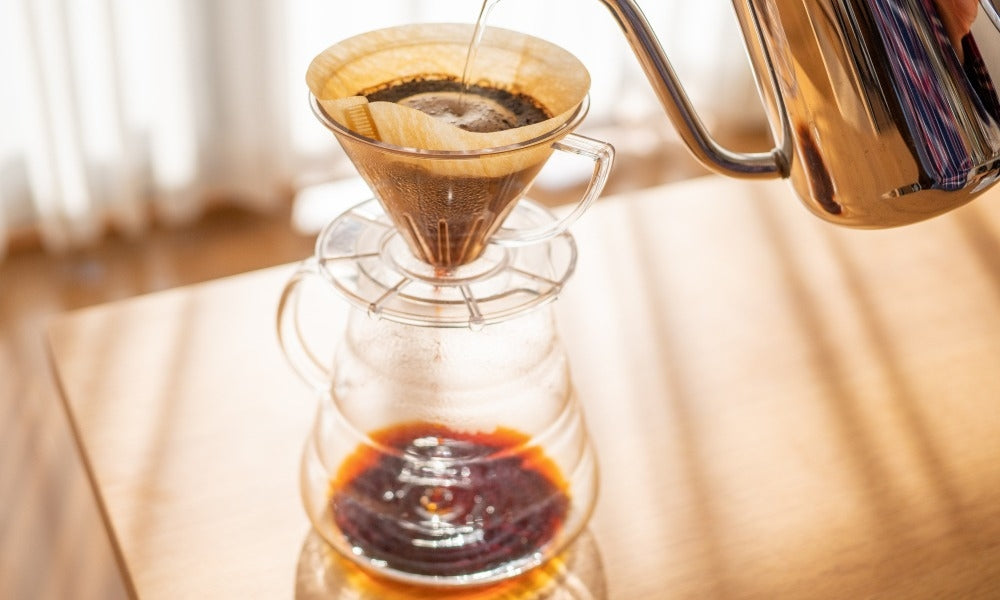
Taking coffee into account, it’s easy to see how these practices can fit in. Next time you brew, think about the aroma of your cup before you take a sip, the satisfying noise of pouring the coffee, or the warmth of the mug in your hands. They all tie into coffee and wellness.
It’s a practice Dale knows well. “I believe wellness in coffee is mostly about intentionality, knowing what you’re drinking and why, and combining some of coffee’s proven benefits with your own personal needs and values.”
Given the wide-ranging benefits of coffee, you can practice mindful consumption in a number of ways. “This can include the pleasure of enjoying new flavours, the ‘slow-time’ and ritual of brewing your coffee, or the physical impact of caffeine and a break from work,” he says.
These might look like small moments, but what changes everything is giving each element of your coffee your full attention. Subtler flavours surface, and you begin to appreciate the cup more broadly, from its roast profile and the brewing method to the soothing impact on your mental state.
Why wellness coffee aligns with market trends and consumer behaviour
Most food and beverage trends fade out in a year or two. Wellness coffee, however, is as popular now as it was during the pandemic, where up to 70% people turned to new health routines to break the monotony of lockdown. Younger consumers, particularly among Gen Z and millennials, are more conscious than ever of what they consume, and coffee is part of that shift.
Dale believes that coffee’s strong connection to health and wellness trends is now more prominent than ever. “I think health and well-being are strong market trends that have crossover with coffee,” Dale says.
“They speak to a target demographic that skews a little more widely than traditional specialty coffee, which focuses on origin, ethics, and cup scores.” While those factors are still vital for transparency, the health benefits of coffee are now just as important in purchasing decisions.
Studies show that younger consumers are curating their coffee and wellness experience around three things: flavour, functionality, and personal values. Wellness-oriented coffee shops, for instance, are growing in popularity to cater to these needs. They focus more on the ritualistic aspect of wellness coffee, creating a space where you can appreciate the cup’s nuances.
Home consumption can be just as effective, however. Up to 70% of consumers make coffee at home every day, making it ripe for more mindful consumption. Whether that’s in your lounge or looking out at the morning sky, having a soothing environment sets you up to appreciate the coffee more deeply.
These practices also go hand-in-hand with the rise of social media and online communities. Younger users already harness platforms like Instagram and TikTok to share videos of their mindful eating practices. Given the popularity of coffee on these platforms – with over 75 billion TikTok views for “#coffee” in 2024 alone – the wellness coffee movement is ripe for expansion.
“Social media’s sharing of personal routines, rituals, and daily habits has also increased the popularity and visibility of these routines,” Dale explains. “They have the potential to change how and where many potential customers see and view coffee in their lives.”

How Zesto Coffee approaches wellness trends
Roasters like Zesto Coffee view the growth of wellness coffee as a permanent industry shift, rather than a trend. As new generations of coffee consumers look for more from their morning brew, our goal is to provide that spark of joy and clarity.
“Zesto’s commitment to presenting coffee as part of a balanced, joyful way of living comes straight from the team's own experience and passion,” Dale says. This story goes all the way back to Latin America, where our team first fell in love with a coffee culture rooted in warmth, colour, and shared happiness.
Inspired by the land of fiesta, we seek out coffee with bold, vibrant flavours, then bring that experience to every cup. These are the moments Zesto lives for. “I think that authenticity and alignment come through in both the coffees they’ve chosen to share and their broader community ethos,” he adds.
Zesto Coffee was built on the belief that coffee consumed mindfully, and with a community of fellow coffee lovers, quickly becomes its own revolution. It transforms each cup into a ritual, an experience, and a moment of reflection. Tuning into the aroma, warmth, and flavour creates space for joy, gratitude, and better focus. That’s without considering the well-publicised benefits of black coffee on physical health, too.
“I think we’re going to see them reaching a different group of people for whom the barista-led specialty shop isn’t as attractive, but the flavours and values of better coffee are,” Dale says. He echoes our vision for spreading wellness coffee into the world.
If this coffee ritual speaks to you – or you're ready to discover what all the fuss is about – we can get you started on your coffee wellness journey. No more settling for mediocre coffee or mornings that leave you flat. Browse our collection of bold, delicious flavours and grab what tickles your fancy!
FAQ
What is wellness coffee?
Wellness coffee is the concept of treating your coffee consumption mindfully. It considers the numerous health and mental benefits of black coffee, from its rich antioxidant content to the soothing nature of a quiet morning brew. Rather than viewing coffee as a source of energy, it’s inspired by the Slow Food movement to slow down and embrace the present.
How does mindfulness improve the coffee experience?
By incorporating mindful rituals into your coffee, you can better appreciate the aroma, flavour, texture, and warmth of your drink. As a result, you’re more likely to savour that five-minute break and treat it as a reprieve from daily life.
Why is wellness coffee becoming popular now?
The shift is mostly down to younger generations, who care deeply about their lifestyle and well-being. They want food and drink that aligns with their health-focused goals, and a more intentional, ritualistic approach to coffee consumption fits those needs.